
Chess board’s 6 training modules provide an efficient path to building your personal training system.
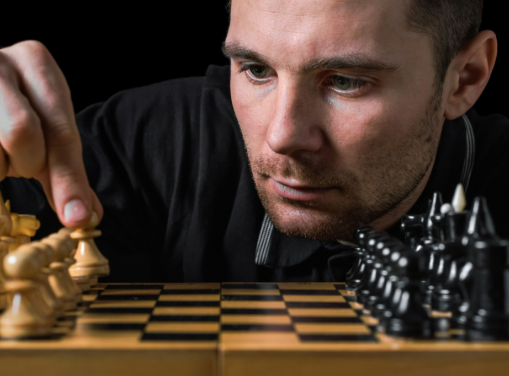
I. The Overall Concept of Chess Training System
Chess is not only a competitive sport but also a systematic cognitive activity. High-level players need not only to master opening theory and tactical skills but also to establish a complete personal training system to support long-term growth and improvement in practical abilities. Building a personal training system means that players can organically integrate chess board operation, memory skills, strategic analysis, psychological qualities, and game review, making the training process efficient and targeted. The chess board is not only the physical platform of the game but also the physical and psychological reference for training modules. Through systematic modular training, players can quickly establish a mental framework and strategic model, thereby forming their own unique chess style.
An efficient personal training system emphasizes modularity, measurability, and feedback. Modular training breaks down complex chess skills into several key components, each of which can be strengthened independently yet interconnected; measurability ensures that training results can be quantified, such as opening proficiency, tactical success rate, and endgame win rate; feedback allows for continuous refinement of training methods through game review, game analysis, and behavioral mapping, forming a closed loop. This systematic training not only improves chess skills but also allows players to achieve deep integration at the psychological, strategic, and memory levels, providing a reliable foundation for long-term growth.
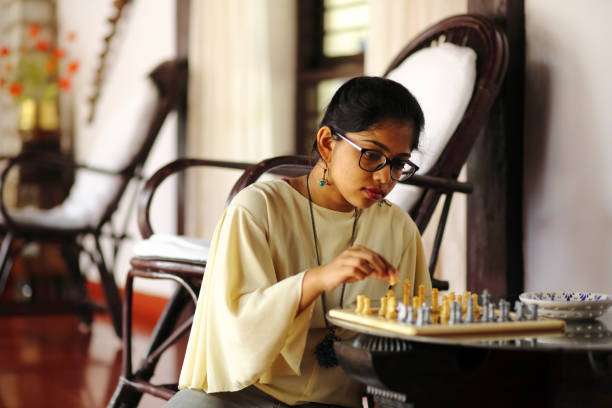
II. Module 1: Enhancing Opening Strategies
The opening is a fundamental module in chess training and a primary step in building a personal chess system. The core objectives of the opening module are familiarity with common opening theories, mastery of piece development patterns, and understanding of center control and opening principles. Through chess board simulations and historical game reviews, players can build their own opening library, clarifying the strategic intent and potential pitfalls of each opening. In training, players should begin with classic openings such as the Italian Opening, the Sicilian Defense, and the Caroka Defense, analyzing the purpose and potential variations of each move.
The opening module emphasizes memory and pattern recognition. Players use chess board visualization and mental simulation to create memory chains of opening moves and opponent responses. This not only helps players react quickly in actual games but also improves their ability to handle varied situations through different opening combinations. Modular training can include opening practice sets, game reviews, and random opening tests, allowing players to develop flexible adaptability while becoming familiar with theory, laying a solid foundation for the middlegame and endgame.
Module 2: Tactical Combination Training Module
Tactical combinations are the concrete manifestation of short-term strategies in chess board and a core module for improving positional control. Tactical module training focuses on enhancing a player’s observation, calculation, and real-time decision-making abilities. Through simulated training on the chess board , involving variations in piece combinations, attack lines, and pincer and restraint techniques, players can quickly identify tactical opportunities and execute optimal strategies. Common training methods include two-move combinations, three-move traps, piece pincers, and dual-attack drills.
In modular training, the chess board serves not only as an operational platform but also as a tool for logical analysis. By marking key squares and recording possible variations, players internalize tactical patterns into mental models, enabling immediate feedback with each training session. The frequency and intensity of tactical combination training directly impact a player’s mid-game control and adaptability. Combined with the opening module, tactical combination training allows players to establish initiative early in the game and accurately capitalize on opponent mistakes in the mid-game, thereby developing a systematic strategic advantage.
IV. Module 3: Endgame Analysis and Refinement
The endgame module is a key component of the individual training system, focusing on strategy execution and refined operations in the endgame. This module trains players to optimize resource allocation, advance pawns, and achieve king-rook coordination under limited piece conditions. Players need to simulate different types of endgames through chess boards , such as king and rook versus king and pawn, king and pawn versus king and pawn, and double rook endgames, to master key skills and winning strategies.
The endgame module emphasizes logical thinking and spatial memory. Through visual simulation and mental imagery training, players can accurately predict their opponent’s moves and potential threats in the endgame. Training can incorporate time constraints and pressure environments to enhance mental resilience and decision-making efficiency. High-level players typically accumulate experience through the endgame module, developing intuitive judgments about complex positions, thus maintaining an advantage and achieving a high win rate in the endgame. Endgame training not only improves operational skills but also strengthens the systematic nature of strategic thinking, making a player’s personal chess board system more complete.
V. Module Four: Memory and Blindfold Chess Training Module
The memory training module and blindfold chess board training are crucial components in building an efficient personal system. By training players to complete chess moves without visual aids, this module enhances their mental imagery reconstruction and spatial memory. Through a combination of single-player visual simulation and two-player blindfold chess training, it helps players fully reconstruct the chessboard layout, piece positions, and strategic variations in their minds. The memory training module emphasizes zoned memorization, progressive simulation, and tactical review, enabling players to maintain clear judgment in complex situations.
Blindfold chess board training not only improves memory but also enhances mental fortitude and attention control. Players learn how to maintain overall awareness under pressure and time constraints, enabling them to better handle complex situations and psychological warfare in actual games. The memory and blindfold chess training modules, combined with opening, tactics, and endgame modules, form a complete closed loop, providing cognitive and psychological support for an individual’s system and giving players a significant advantage in high-level games.
Module 5: Psychological Quality and Stress Management
The psychological resilience module focuses on a player’s emotional control, decision-making stability, and strategy execution under high-pressure conditions. By simulating match pressure, time constraints, and scenarios of consecutive mistakes, it trains players to remain calm and make clear judgments under psychological load. In this module, the chess board is not only an operational tool but also a reference for psychological observation. By recording the placement of pieces, the rhythm of moves, and operational habits, players can analyze their own psychological reaction patterns and make targeted adjustments.
Psychological training emphasizes the integration of cognition and emotion. Chess players optimize both strategy execution and mental state simultaneously through meditation, concentration training, and mental review. Within an individual’s system, the psychological training module serves as the link between memory, tactics, and strategy, ensuring the consistent application of training results in actual gameplay. High-level chess players generally prioritize psychological training because, in crucial situations, the correctness of decisions often depends on psychological resilience and the stability of attention.
7. Module Six: Retrospective and Behavior Mapping Module
The post-game analysis and behavior mapping module is an integral part of the individual system, aiming to develop strategy optimization and behavior prediction models through systematic analysis of one’s own games and opponent’s behavior. During the post-game analysis, players use a chess board to record each move, tactical application, situational changes, and decision-making intentions, comparing the actual game with the expected plan to summarize lessons learned. The behavior mapping method further analyzes the opponent’s habits, psychological tendencies, and strategic preferences, providing targeted guidance for future games.
This module not only enhances players’ strategic understanding and positional analysis abilities but also forms a closed knowledge loop, enabling the opening, tactics, endgame, memory, and psychological modules to support each other. Through systematic review and behavioral mapping, players can continuously adjust their training strategies, optimize their personal system structure, and achieve efficient growth. The review module emphasizes data-driven approaches and feedback mechanisms, ensuring that each training session and game is transformed into a driving force for long-term improvement, thus forming a sustainable development model within the individual’s chess board skill system.
VIII. Efficient Pathways to Building a Personal System
By systematically integrating six training modules, chess board players can construct a scientific, complete, and efficient personal training system. The efficient approach includes modular training design, phased goal setting, periodic review, and strategy iteration. Specifically, the training process combines modules on opening reinforcement, tactical combinations, endgame analysis, blindfold chess memorization, psychological resilience, and post-game behavior mapping to form a closed-loop training process. Each module sets phased indicators, such as opening proficiency, tactical success rate, endgame win rate, and psychological stability. Through periodic review and behavior mapping, training data is compared with actual game results to continuously optimize training strategies.
The efficient path emphasizes the integration of training and practice. Players accumulate theoretical and operational skills in the training modules, test the effectiveness of their strategies through actual games, and simultaneously feed practical experience back into each module, leading to iterative optimization. The systematic integration of the six modules creates a synergistic effect on the player’s memory, strategy, psychology, and operation, achieving a comprehensive improvement in their personal system. Long-term adherence to this path not only significantly improves chess skills but also fosters a unique playing style and a stable win rate.
IX. Conclusion: The Strategic Significance of Systematic Training
Chess Board’s six training modules cover all aspects of chess skill development, from opening strategies to tactical combinations, from endgame analysis to memory and blindfold chess board, and from psychological qualities to post-game behavior mapping, forming a systematic, modular, and closed-loop personal training system. Through scientific planning and efficient implementation, players can comprehensively improve at the cognitive, psychological, and operational levels, achieving a unity of game initiative, strategic precision, and psychological stability. This systematic training is not only a tool for improving chess skills but also a strategic means for players’ long-term development and self-breakthrough, providing a sustainable and efficient growth path for both professional and amateur chess board players.
FAQ
Question 1: Must the six training modules be conducted simultaneously?
The six modules should be systematically planned, but not necessarily simultaneously. Players can arrange the training order of the modules according to their individual skill level and goals, achieving comprehensive development through phased combinations.
Question 2: How long does it take for a personal systematic training program to significantly improve chess skills?
The results vary from person to person. Generally, after three to six months of systematic training, players will see a significant improvement in opening proficiency, tactical execution, and psychological stability.
Question 3: How to test the effectiveness of the training modules in actual combat?
This can be achieved through regular real-world matches or game simulations, applying the strategies, tactics, psychological skills, and memory techniques learned in the training modules to actual gameplay, and continuously optimizing the system by analyzing the gaps through post-match reviews.