
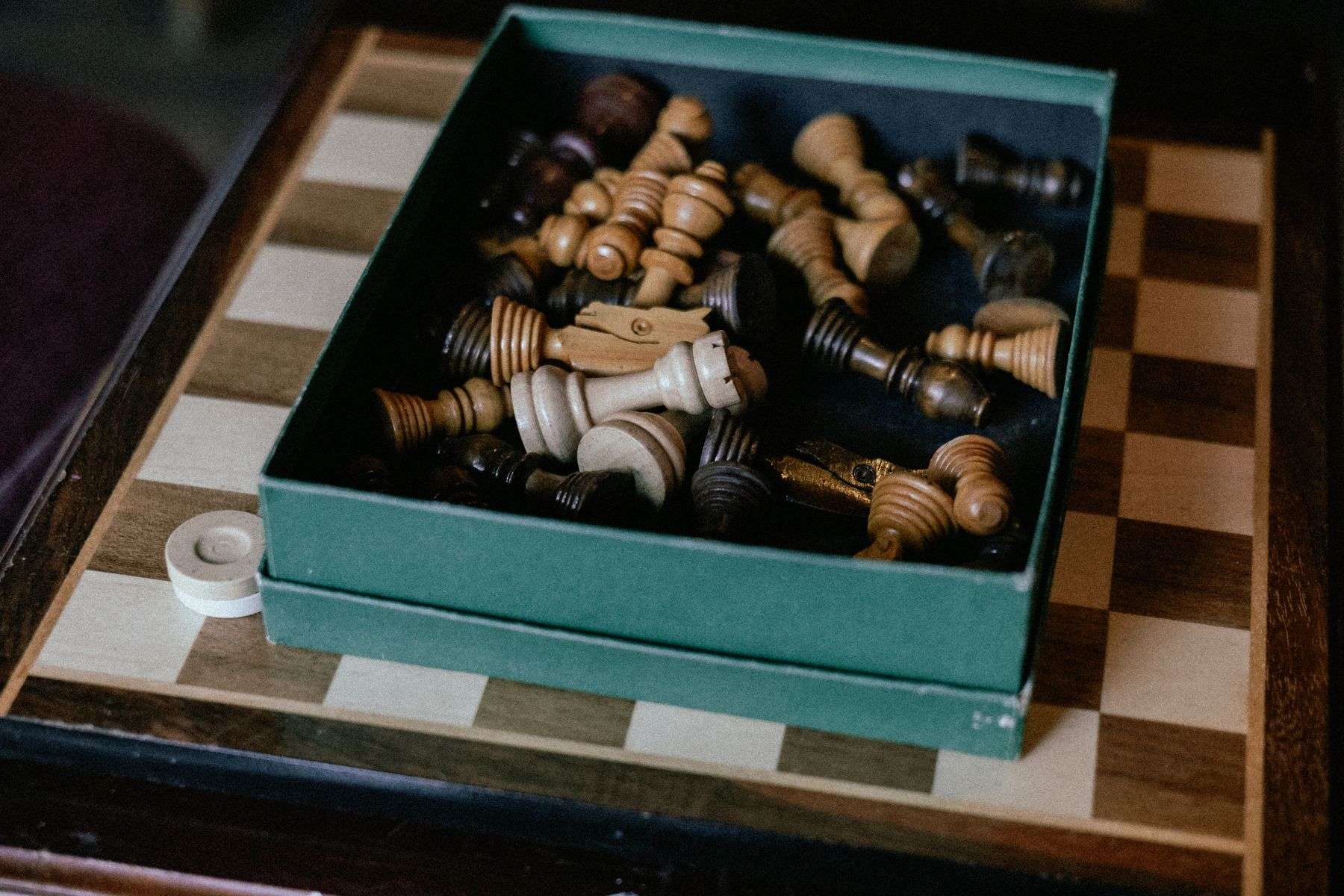
Chess Set Storage: Protect Pieces Without Creating New Wear
Chess set storage is not just a place to hide pieces. The inside of the case decides whether felt is crushed, knight noses rub, extra queens disappear and a humid afternoon turns a smooth drawer into a jammed one.
Storage is a tradeoff between restraint and tolerance
Very tight slots prevent movement but can rub felt and delicate details. Loose bags load quickly but allow collisions. The right design depends on the pieces, travel frequency and room climate.
Fitted slots
Best when the slot shape supports the base and body without compressing felt, crowns or knight noses.
Loose compartments
Faster to pack, but use soft separation when hard or finished pieces can strike each other.
Drawers
Convenient for home use if they stay shut when moved and have enough clearance through seasonal changes.
04Folding interiors
Efficient for travel, but closed thickness and piece retention must be checked with the full set loaded.
A storage check before the lid closes
Storage should protect the same details that make a set pleasant to play: flat felt, intact crowns and noses, stable finishes and a complete inventory.
Load every slot
A case that looks organized empty may become too tight when all kings, queens and spare pieces are installed.
Check contact points
Look for felt compression, rubbing on painted surfaces and pressure on thin necks or carved details.
Control loose movement
If pieces share a compartment, add soft separation when movement during transport can cause chips, noise or color transfer.
Keep extras identifiable
Spare queens and replacement pieces need a repeatable home so a 34-piece set is not mistaken for a missing or overfilled set.
Respect the room climate
Wooden boxes and drawers can change fit with moisture. Do not force a swollen drawer; first consider the storage environment.
Protect the piece that is not being played
Chess box, chess set box, chess storage box, chess piece case and chess set storage describe the hidden half of ownership. A case has to prevent collision without pinching delicate crowns or felt, make 32 pieces plus any extra queens countable, and reopen without forcing swollen drawers or strong magnetic closures. Good storage makes a missing piece obvious before it becomes a replacement search.
No rattling does not prove the pieces are protected. Tight foam can rub the same detail on every trip; a loose pouch can allow surface-to-surface contact without enough movement to make noise. The useful inspection looks at contact points, clearance and whether moisture is being trapped inside the case.
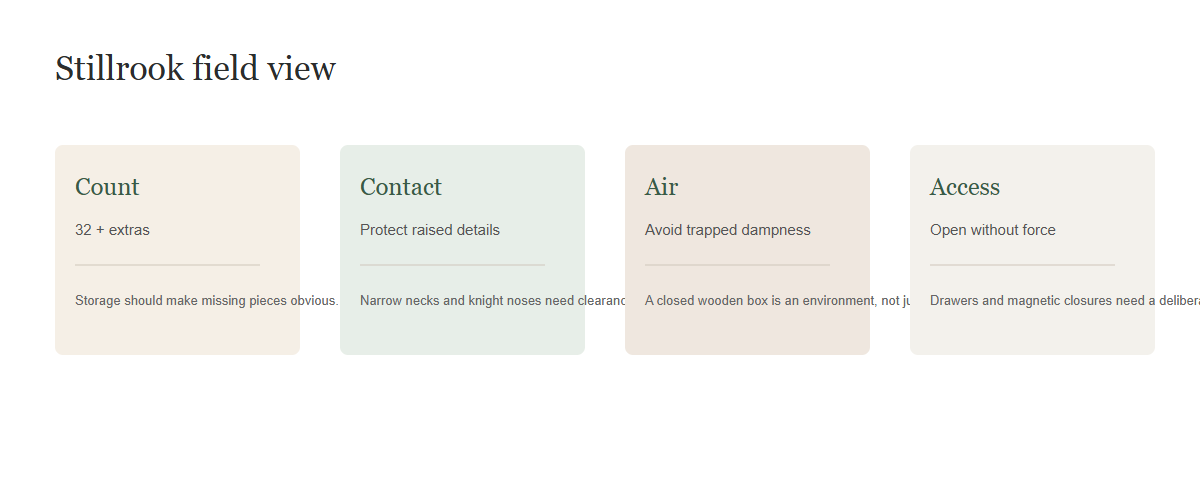
Load the case before trusting the fit
Storage should protect the most fragile part of each piece while making inventory simple. Load the actual set, close the box or bag normally, carry it in the orientation it will be stored, then reopen it and look for rubbing, compression and pieces that have escaped their assigned spaces.
They should have a labeled or memorable position.
Crowns and knight faces should not carry foam pressure.
Do not trap moisture after outdoor or rainy-day use.
A five-minute wipe-and-count routine prevents many replacement searches.
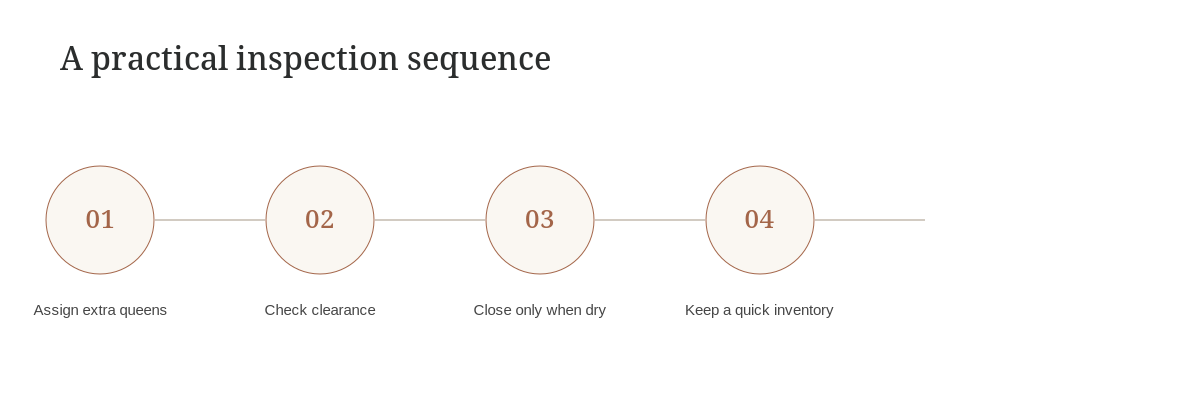
The case is part of long-term ownership
Recheck storage after the set has been used for a while. Felt can collect debris, foam can loosen, straps can stretch and a once-clear inventory pattern can become confusing if extra queens or replacement pieces do not have fixed locations.
| Count | Give every regular piece and promotion extra a repeatable position. |
|---|---|
| Contact | Keep foam and separators away from fragile crowns, noses and loose felt edges. |
| Moisture | Close the case only after the set is dry and stable. |
| Access | Open drawers and closures by their designed grip point rather than by prying edges. |
Individual slots trade security for tolerance
A tight foam cutout can stop pieces from colliding and still abrade felt or squeeze a narrow crown. Storage should immobilize the piece at a robust point, not by pinching its most delicate shape.
Loose bags trade speed for collision
A drawstring pouch is quick and compact, but pieces can rub during travel. If a bag is used, separate delicate or high-gloss pieces, and do not assume “no rattling” means no surface contact.
Wooden drawers respond to the room
A drawer that changes feel during a humid period may be reacting to moisture rather than poor craftsmanship alone. Forcing or sanding it immediately can create excess play after conditions normalize.
Every storage method chooses a different kind of contact
The question is not simply whether the pieces are “protected.” Protection means controlling how pieces touch the case and one another while still allowing for small variations in carving, felt and wood movement.
| Storage type | Strength | Tradeoff to inspect |
|---|---|---|
| Individual fitted slots | Stops pieces colliding and makes counting easy | Slots can press on knight noses, crowns or felt if tolerances are too tight |
| Loose fabric bag | Fast, flexible and tolerant of different piece sizes | Pieces rub against one another and delicate profiles receive less protection |
| Shallow tray | Good visibility and quick inventory | Pieces can move if the tray is carried vertically or the lid has excess space |
| Wooden drawer | Keeps pieces with the board and can feel furniture-like | Drawer clearance, stops and wood movement become maintenance points |
| Separate chess box | Can be selected independently from the board | Requires its own shelf space and must be sized for the actual pieces |
Load the case before trusting its dimensions
An empty tray can look generous while a loaded tray places pressure exactly where a carved piece is weakest. The inspection should use the full set, including spare queens and any clock, booklet or accessories that share the compartment.
Count before closing
Use a repeatable arrangement so an empty slot or missing pawn is visually obvious. If storage is loose, a small piece-count card can do the same job.
Check the highest points
Close the lid gently and verify that king crosses, queen crowns and knight noses are not touching hard surfaces. Compression marks in foam are a warning that the case is relying on pressure to fit.
Check the lowest points
Felt should remain flat. A slot that catches one side of the felt can create the same wobble that looks like a woodworking defect later.
The missing white pawn was under the sofa
One Stillrook note begins with a white pawn that disappeared for two days and reappeared under the sofa beside a button. The useful question was not who had been careless. It was why the set made it easy for one piece to separate from the rest and why the count was not obvious when the game ended.
Storage is part of the product’s daily workflow. Individual slots, trays, bags and boxes create different tradeoffs between speed, protection and tolerance. A good system makes it easy to see when something is missing before the lid closes.
Storage, slots and replacement questions
Storage should reduce wear, missing pieces and setup time without squeezing the pieces or trapping them in a difficult environment. The right solution depends on how often the set moves and how precisely the case fits.
Wood movement reference for cases and drawers
Can tight foam storage damage chess pieces?
Yes. Foam that grips a robust base can be useful; foam that presses on a knight nose, king crown, thin neck or felt edge can cause rubbing or deformation. The piece should be secure without being pinched at its most delicate detail.
How do loose storage pouches prevent pieces from rubbing each other?
A simple pouch often does not prevent contact. Delicate or high-gloss pieces may need soft separators or individual sleeves. For travel, the benefit of quick packing has to be balanced against surface contact.
Where should extra queens be stored?
Give spare queens and replacement pieces their own recognizable storage positions. The goal is not merely neatness: a fixed inventory pattern makes it obvious when a starting piece is missing before the box is closed.
Why can a wooden storage drawer become tight or loose?
If a wooden storage box or drawer starts binding, empty it before assuming the wood itself is defective. Check for a misplaced piece, debris in the runner, compressed lining and indoor moisture changes; forcing a loaded drawer can turn a small fit issue into damage.
What small parts can exist in a chess set besides the main pieces?
Extra queens, internal weights, metal plates, felt pads and magnets can all become relevant if they detach. Product age guidance should consider the physical construction, not only the intended chess skill level.
What is the best way to replace a missing chess piece?
For a good match, record piece type, color, height, base diameter, weight, finish and felt. If the original set has aged noticeably, an exact new-piece color match may be impossible.