

Chess Pieces Only & Replacements: Match Size, Color, Weight & Wear
Replacing a lost pawn sounds simple until the new pawn is darker, lighter, taller, heavier or fitted with thicker felt. A useful replacement record captures the details that remain visible when the piece returns to the row.
Record what has changed before ordering the replacement
Searches for chess pieces only or wooden chess pieces only often come from an incomplete set, not from someone building an entirely new one. Matching a replacement means more than choosing “black pawn.” Height, base diameter, weight, felt thickness, finish sheen and the aging of the existing set can all make a technically correct piece look wrong in the rank. This page keeps replacement intent separate from the broad chess-pieces hub.
Color is especially difficult because wood and stain change with light and handling. If an exact batch is unavailable, a pair of matching replacements can sometimes look more deliberate than one fresh piece among older neighbors. A side-by-side photograph is more useful to a supplier than a standalone photo of the missing gap.
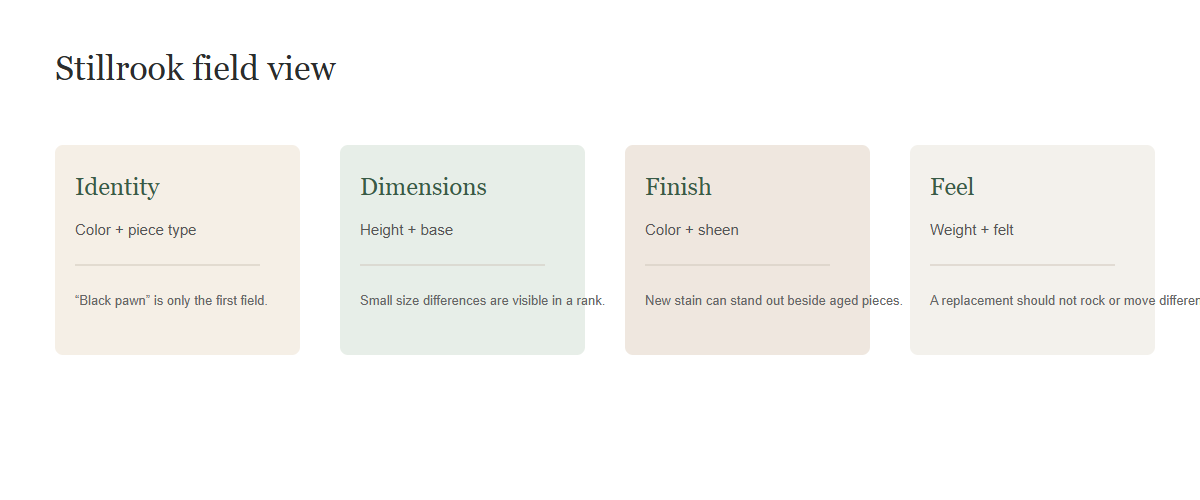
A replacement workflow that prevents a second mismatch
The safest order is identify, measure, photograph, compare and only then buy. If the original set has aged strongly, a paired replacement can sometimes look more coherent than one brand-new piece.
Photograph next to its pair
For a missing black rook, photograph a surviving black rook and the corresponding white rook under the same light.
Measure more than height
Base diameter and overall proportions are often more visually disruptive than a small height difference.
Record wear
Note chips, patina, darkening and felt compression. A perfect new finish may stand out against a well-used set.
Protect delicate parts in shipping
Crowns, knight noses and thin necks need immobilization; a loose bag inside a box can allow pieces to damage each other.
Decide the acceptable mismatch before buying
For casual home play, a close functional match may be enough; for a display or heirloom set, material and finish matching may dominate.
Record the surviving set before ordering
Replacement matching is a comparison job, not a name lookup. Put the surviving piece beside a ruler in neutral light, record its height and base, photograph the finish and underside, and note wear before searching for a nominally similar replacement.
Piece, color, height, base diameter, weight and felt/finish.
A comparison photo communicates color better than a standalone image.
It can help match thickness and texture.
A seller should be able to say when an exact match is unlikely.
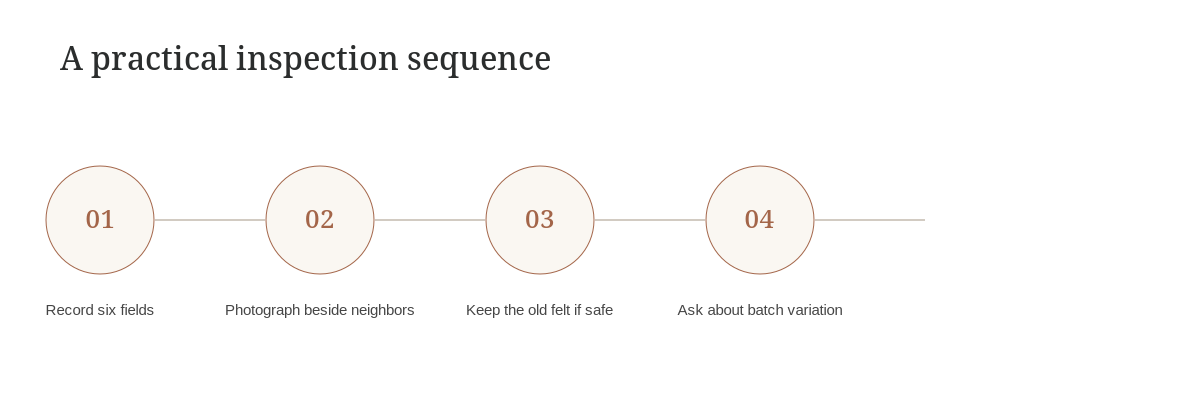
Match the physical record before you match the piece name
A pawn from the same general style can still look wrong if its base, weight, felt or finish differs. Record the surviving set before ordering anything.
Dimensions
Measure height and base diameter of the same surviving piece type, preferably more than one example.
Weight
Use a small scale if matching handling matters. Internal weighting varies even when pieces share a silhouette.
Color and finish
Compare in neutral daylight and note gloss level. A new replacement can look “younger” than an aged set.
Felt
Thickness, color and wear affect both height and friction; replacing felt can change the match.
Create a six-field record before you search for the missing piece
The fastest way to avoid a second mismatch is to describe the piece you still have. For pawns, use a surviving pawn from the same color. For a unique piece such as the queen, use measurements from its opposite-color pair and photograph the target set under neutral light.
| Record | How to capture it | Why it matters |
|---|---|---|
| Height | Measure from flat base to highest point | Rules out obviously wrong series |
| Base diameter | Measure the widest part of the base | Controls board fit and visual proportion |
| Weight | Use a small digital scale if available | Prevents one pawn or rook feeling unusually light or heavy |
| Color and sheen | Photograph beside its neighbors in daylight and normal room light | Separates color mismatch from lighting differences |
| Felt | Photograph color, diameter, thickness and edge condition | A mismatched felt pad can change height, friction and wobble |
| Distinctive carving | Front and side photos, especially for knights | Different production runs can share dimensions but not silhouette |
Decide what kind of mismatch you can accept before paying for the replacement
An exact same-batch replacement is ideal but not always available. If the original set has aged, even the correct material may arrive looking newer. Make the compromise explicit.
Playing match
Prioritize base diameter, weight, height and stability. This is the right priority when the set is used heavily and small visual differences are acceptable.
Display match
Prioritize color, sheen, carving and wear. A piece that handles perfectly but looks obviously different may still fail a display set.
Temporary match
Use a clearly disclosed substitute until an exact replacement is found. This is often better than pretending that a visibly different pawn is an exact match.
Knight noses, king crosses and thin crowns can be damaged even when the outer box looks intact. A replacement should be immobilized and protected from direct pressure, not dropped loose into an oversized box.
Make a replacement brief before you start searching
A missing pawn or damaged bishop is easiest to replace when the surviving set is turned into a small reference sheet. The goal is not to guess the original product name. It is to record enough observable details that a seller—or your future self—can reject near-matches quickly.
| Record | How to capture it | Why it changes the match |
|---|---|---|
| Piece identity and color | Name the piece and photograph it beside its same-color neighbors | A “black pawn” description alone ignores shape family and tone |
| Overall height | Measure from the flat base surface to the highest point | A few millimeters can become obvious when a replacement stands in a row |
| Base diameter | Measure the widest contact diameter, excluding loose felt fibers | Base size changes both board fit and the visual scale of the army |
| Silhouette | Photograph front and side views at the same camera distance | Knights, bishops and crowns can differ strongly within the same broad style label |
| Finish and tone | Use neutral daylight or a neutral lamp and include another original piece in the frame | Species names and “black/white” labels do not describe sheen, stain depth or aging |
| Underside | Record felt color, recess shape, weighting cavity and any maker mark | The base often reveals construction details that are invisible from above |
Decide what must match when an exact twin no longer exists
An older set may have changed color, the original maker may have revised a carving, or the exact model may no longer be sold. In that situation, define the purpose of the replacement before accepting a compromise.
For regular play, protect function first
Base diameter, height, recognizability and stability usually matter more than a microscopic color match. A replacement that fits the square and reads instantly can be a better playing solution than a visually closer piece that rocks or crowds its neighbors.
For display, visual continuity moves up the list
Finish sheen, grain, carving details and natural aging become more noticeable when the set spends most of its time arranged. Ask for photographs beside a ruler and, when possible, beside a known reference color rather than accepting a species or stain name as proof of a match.
For a temporary substitute, make the difference obvious
A clearly temporary piece is often less confusing than an almost-matching substitute that looks like a defect. Keep the original measurements and photographs so a closer replacement can be found later without repeating the investigation.
Expect an older wooden set to have its own color history
Wood tone and surface sheen can change with light exposure, handling and care. That means a newly made piece can be correctly specified and still look “younger” than the army it joins. Compare the replacement with several surviving pieces rather than with a memory of the original color.
Do not try to force a match immediately with stain, oil, sanding or other irreversible treatment unless the material and finish are known and the care method is appropriate. First decide whether the difference is acceptable in play, whether ordinary aging may reduce it, and whether a better factory or second-hand match is realistically available. The replacement task is finished when the piece works with the set you own—not when a generic product title happens to sound similar.
The replacement pawn looked younger than the rest
A Stillrook note describes a dark pawn that was replaced successfully by name and size. The new pawn still stood out: its color was deeper, the felt was thicker and the surface lacked the small wear marks that had accumulated on the rest of the set.
That is why “matching replacement” needs more than height. Color batch, base diameter, weight, finish, felt and age all contribute to the visual line of eight pawns. Sometimes an exact match is possible; sometimes the buyer is choosing the least noticeable compromise and should know that before ordering.
Replacement and matching questions
A replacement that shares the same piece name can still look and feel wrong. The surviving set should be measured and photographed before the new piece is ordered.
What is the best way to replace a missing chess piece?
For a good match, record piece type, color, height, base diameter, weight, finish and felt. If the original set has aged noticeably, an exact new-piece color match may be impossible.
Does replacing felt change how a chess piece plays?
It can. Different thickness, density or adhesive can change height, friction and stability. Match the original material as closely as possible and check the finished piece in a row with its neighbors.
How should chess pieces be protected during shipping?
Prevent both movement and point pressure. Knight noses, king crowns, narrow necks and board corners can be damaged even when the box does not rattle. Use separation and support at durable contact points.
What small parts can exist in a chess set besides the main pieces?
Extra queens, internal weights, metal plates, felt pads and magnets can all become relevant if they detach. Product age guidance should consider the physical construction, not only the intended chess skill level.
What belongs in long-term value besides purchase price?
Replacement availability, care cost, return friction, durability, storage convenience and the likelihood the set will actually be used. A set that fits daily life can deliver more value than one that looks impressive but remains stored.