
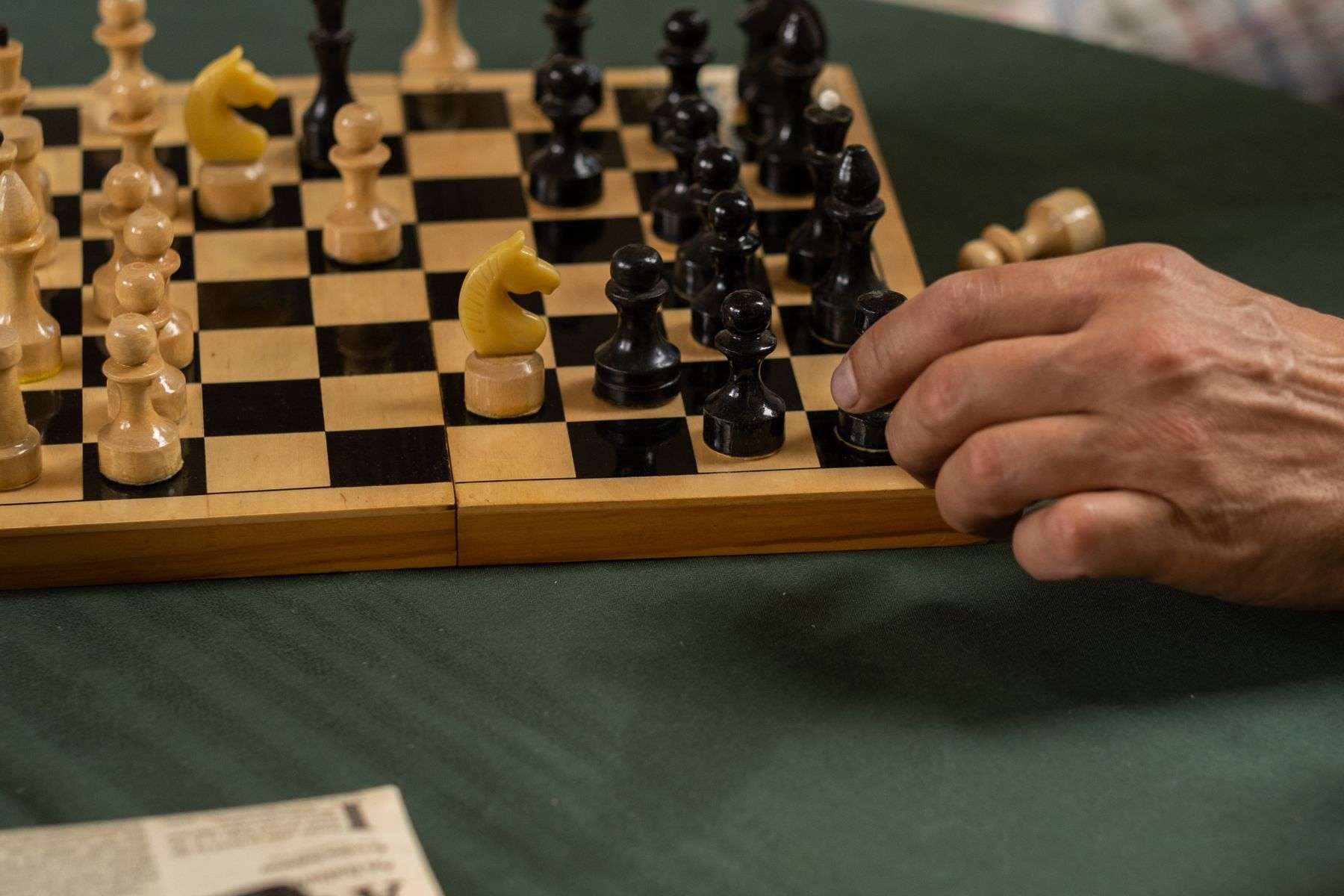
Folding Chess Boards: Flatness, Hinges, Closure & Storage
A folding chess board earns its space by becoming smaller when the game is over. The hinge, center seam and closing system therefore deserve the same attention as the squares. A beautiful closed box is not enough if the open board rocks or the seam lifts pieces.
Judge the board while it is open, not while it is boxed
Foldable chess board, folding chess set and folding wooden chess board searches are often attracted by storage efficiency. The physical question appears only after opening: do both halves reach the table, does the center seam sit level and can a piece stand beside it without rocking? Hidden hinges can look cleaner and exposed hinges can be easier to inspect; neither design wins without a flat open board and a closure that does not invite users to pry thin edges.
A case that closes strongly can still be poorly handled if the only way to open it is to lever against veneer or a sharp corner. Likewise, a tight drawer in humid weather is not automatic proof that the joinery is defective. Debris, foam pressure and seasonal wood movement should be separated before force or sanding enters the conversation.
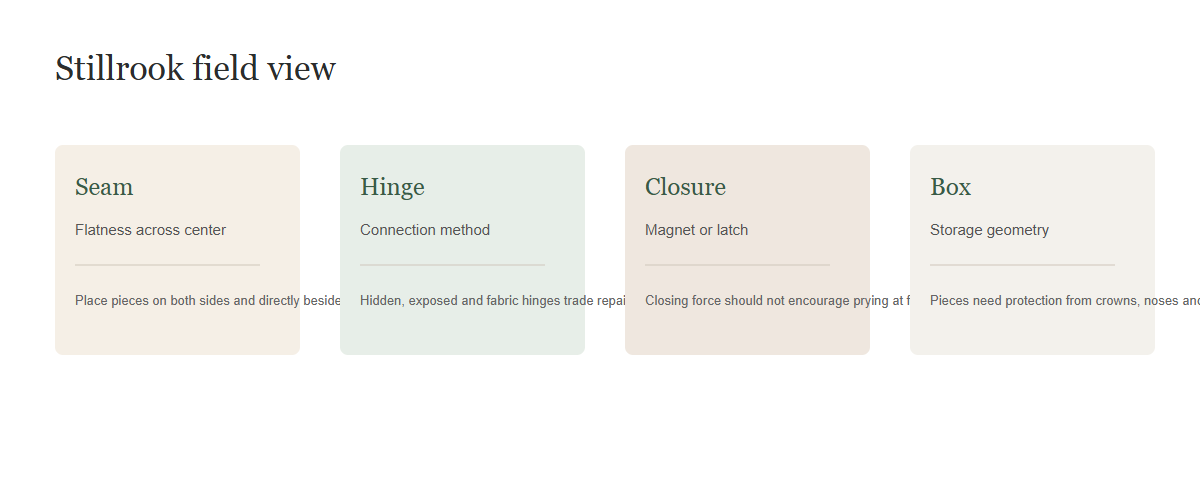
Judge a folding board while it is open
The hinge solves storage, but it also creates the most important part of the playing surface: the center seam. Flatness and closure should be tested as one mechanism.
Center seam
Place pieces on and beside the fold. A visible hinge is less important than whether the two halves form one stable plane.
Hinge style
Exposed hardware can be serviceable; concealed hinges protect the exterior; flexible connections trade rigidity for simplicity.
Closure force
A closure should stay shut in transit without forcing users to pry at vulnerable veneer or edges.
Interior storage
If pieces live inside the folded board, check slot pressure, retained height and whether loose pieces can collide.
Test the board where it folds
Put a king or rook near the seam and tap the table lightly. A small ridge that is invisible at eye level can reveal itself as rocking. Also check whether both halves reach the table evenly; a flat tabletop can make a warped board easier to diagnose.
A strong closure can create a new handling problem
If a magnetic closure is too strong, users may pry the case apart at thin edges. Over time that can stress finish or veneer. The best closure holds the box during carrying while giving the hand a deliberate opening point.
Humidity can change how the case closes
Wooden halves, frames and drawers can respond to seasonal moisture. If a case suddenly tightens, forcing it shut is not the first move. Remove obstructions, let it stabilize in a moderate environment and inspect the seam before applying pressure or sanding.
Put the center seam under a piece
A folding board adds moving parts to an otherwise flat playing surface. Open and close it several times, run a fingertip across the center seam, press near all four corners and check whether the closure still aligns after the pieces have been stored inside.
Separate board movement from table wobble.
Watch for rocking or height change.
A case should align without using the latch to force the halves together.
Foam should not crush narrow necks or rub raised carving.
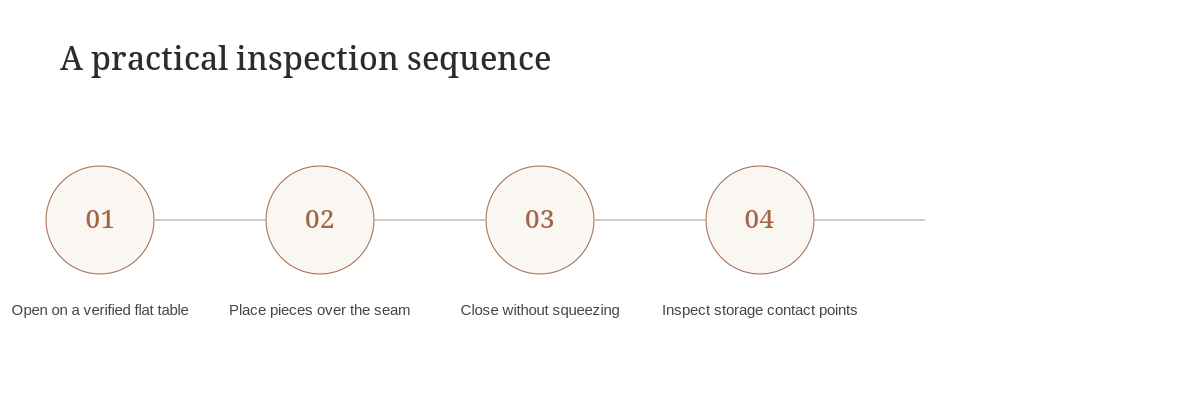
Four folding-board failure points to check early
A board can look flat in a photograph and still rock, crown at the seam or close unevenly. Test it before the return window is over and again after it has lived in the room.
Seam crown or dip
Sight across the surface from a low angle, then place a piece on the squares crossing the fold. The issue is functional flatness, not cosmetic perfection.
Half-to-half twist
Press gently near opposite corners. Rocking can come from the table, the board or unequal movement of the two halves; isolate each possibility.
Over-strong closure
If opening requires flexing the edge or digging fingers into a veneer seam, the closure can create its own wear point.
Packed dimensions
Measure the closed length, width, thickness and weight. Those values determine luggage fit more reliably than open board size alone.
Seasonal movement
Wooden halves can respond differently to moisture. A changing seam or closure is a reason to review storage conditions before forcing the mechanism.
Check the fold in more than one season
Folding hardware deserves a second inspection after ordinary use. Look for a seam that has become proud of the squares, a hinge that has loosened, a closure that needs force, or internal storage that has begun pressing pieces against the case.
| Opening | Set the board on a known-flat surface before judging the seam. |
|---|---|
| Playing | Place stable pieces beside the fold and tap the table lightly. |
| Closing | Align the halves without using the latch to force them into position. |
| Seasonal change | If the case tightens, check environment and obstruction before removing material. |
Diagnose the center seam before blaming the table
Folding boards can show a raised seam, a shallow dip, twist between halves or simple movement caused by an uneven table. Each feels similar during play but points to a different cause. A controlled inspection keeps the diagnosis simple.
Use a known flat surface
Clear the board and check all four corners for rocking. Rotate the board 180 degrees. If the same corner of the board still lifts, the board is more likely to be involved than the table.
Place pieces directly across the seam
Use a king, rook and pawn because their bases respond differently. Look for wobble, a visible height step or a gap that catches a sliding base.
Open and close without forcing
A closure that requires prying at a veneered edge can create a new wear point. The ideal closing force is enough to stay shut in transport without encouraging the user to flex the board or pinch the edge.
Hinge style changes the tradeoff, not the need for a flat playing surface
Visible metal hinges, concealed hinges and flexible connections solve the folding problem differently. None is automatically superior. The comparison should focus on how the board opens, whether the hardware projects below the surface, how repairable it is and whether both halves remain aligned.
| Design question | What to inspect | Why it matters in use |
|---|---|---|
| Center geometry | Crown, dip, gap and height difference | Pieces near the center should stand normally and slide without catching |
| Hinge projection | Hardware below or beside the board | Projected hardware can become a pressure point on a table or inside a bag |
| Closure | Magnet, latch, friction or case clasp | Too little force opens in transit; too much encourages prying |
| Climate response | How each half sits after a seasonal change | Wood-based halves can respond differently to moisture and storage conditions |
A receipt under the table leg solved the wrong suspect
One Stillrook note records a folding board whose center seam looked slightly raised. A king near the fold rocked just enough to be annoying. Jose first suspected the table, folded a receipt under one table leg and checked again; the rocking remained. The small test separated furniture unevenness from the board itself.
That is the right level of attention for a folding board. A tiny crown or dip at the seam may matter more over a long game than a beautifully finished exterior. The fold should be inspected as a playing surface, not only as a packaging feature.
Questions about seams, hinges and closing
A folding board succeeds or fails at the fold. The seam, hinge, closure and the two halves of the board should be judged while the board is open and carrying pieces, not only while the case is closed.
Wood movement reference
How much does a raised folding seam matter?
A small ridge can be enough to make a piece rock or change how a hand crosses the center. Test on a known-flat table and place stable pieces immediately beside the seam. The issue is more important for long games than for a five-minute travel game.
Do hidden hinges automatically make a folding board better?
No. Hidden hinges can improve appearance and reduce exposed hardware, while other hinge types may be easier to repair. What matters most is whether the open board lies flat, closes reliably and can be serviced if the connection loosens.
Can a strong magnetic closure damage a folding board?
If the closure is so strong that users pry thin veneer or sharp edges apart, it can encourage damaging handling. A good design provides a deliberate grip point and enough holding force for carrying without using the latch to force alignment.
Which measurements matter when a folding set is carried in a bag?
For a folding set, closed dimensions matter together with the hinge and latch geometry. Measure the thickest point, including hardware, and listen for pieces moving inside after the case is closed; a compact outline is less useful if the contents can strike one another during transport.
Can the two halves of a folding board move differently with humidity?
Yes. If materials, grain orientation or moisture response differ between halves, alignment and the center seam can change. Avoid forcing the closure while the board is adjusting to a new environment.
Why can a wooden storage drawer become tight or loose?
If a wooden folding case becomes harder to close, first remove the pieces and inspect the seam, hinges and any debris caught near the edges. Indoor moisture changes can affect wood, but an overfilled insert or shifted lining can create the same symptom; isolate the cause before sanding or forcing the case.