

Wooden Chess Sets: Match Materials, Weight, Finish & Aging
A wooden chess set combines two objects that age differently: a board and thirty-two or more individual pieces. Wood species, stain, finish, weighting and felt all affect how the set changes with use. Matching the look on day one is only part of the job.
Match the set across time, not only on day one
A wooden chess set can combine a hardwood board, turned pieces, internal weights, felt pads, stains and more than one protective finish. Search phrases such as wood chess set, wooden chess sets, handmade wooden chess set, hardwood chess set and ebony chess set tend to focus attention on species and craft. Stillrook broadens that comparison to base diameter, real piece weight, felt, board flatness and the possibility that different woods or finishes change color at different rates after light and handling.
“Weighted” is especially easy to over-read. Single-, double- and triple-weighted are not universal mass standards. Actual piece weight, base width and center of gravity explain hand feel far better. The same caution applies to “ebony”: true ebony, ebonized wood and an ebony-colored finish are materially different descriptions.
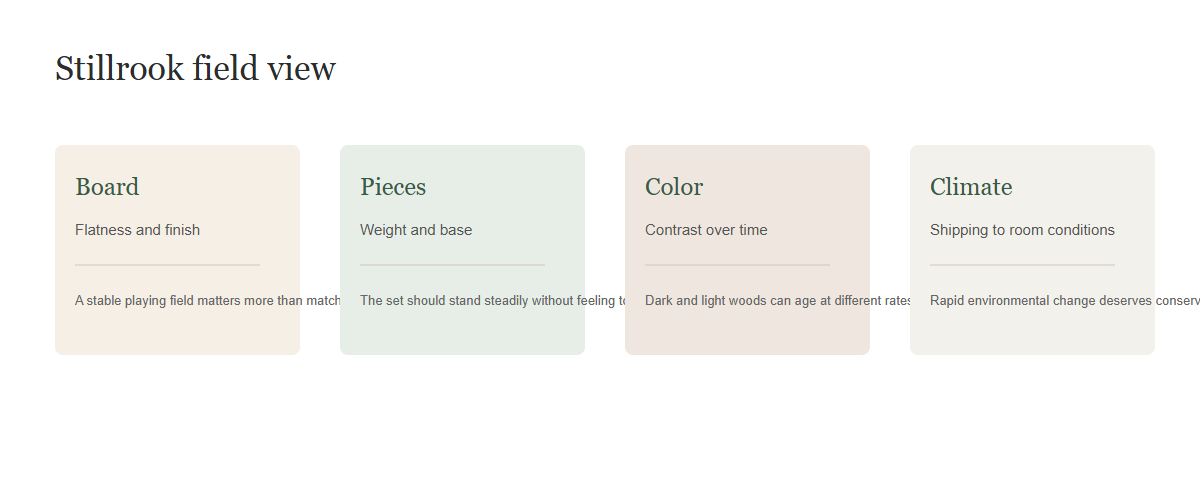
Five questions that reveal the real wooden set
The strongest material description separates what can be verified from what is simply visual. That matters for color matching, maintenance, shipping and later replacement.
Will board and pieces age at the same rate?
Different woods and finishes can darken, lighten or mellow differently. A perfect day-one color match is not a promise of permanent uniformity.
What does “weighted” actually mean?
Compare mass, base diameter and center of gravity when available. Marketing tiers such as single-, double- or triple-weighted are not standardized across makers.
Are the felt bases level?
Uneven felt can make a perfectly turned piece rock. Check several pieces on a flat hard surface before blaming the board.
Did the set acclimate after shipping?
A large climate change can affect wood. Let a cold or hot shipment approach room conditions before aggressive cleaning or treatment.
What happens if a piece cracks later?
Replacement availability and the ability to match size, color and finish can matter more than a short warranty headline.
Board and pieces need different checks
The board is a broad laminated or solid structure; the pieces are turned or carved objects with narrow necks, weighted cavities and felt bases. A finish that protects the board does not tell you how the pieces are weighted or how the felt is attached.
“Weighted” needs a physical meaning
Single-, double- and triple-weighted are not universal measurement standards. Actual piece weight, center of gravity and base width are more useful. A heavily weighted tall piece can still be less stable than a slightly lighter piece with a broader base.
Let a shipped set settle before aggressive maintenance
If a wooden set has crossed a large humidity or temperature difference, immediate sanding, oiling or forcing a tight box can turn temporary movement into damage. Stabilize the environment, document the condition and let the set acclimate before making irreversible changes.
The board and the pieces live different lives
A complete wooden set can use one wood for the board, another for light pieces, a stained wood for dark pieces and a different material again for the bases. The most useful comparison separates those parts instead of treating “wooden” as one specification.
Board surface
It carries sliding friction, spills, light exposure and the broad effects of room humidity. Flatness, finish and edge construction matter more here than the carving detail that matters on a knight.
Piece bodies
Pieces are handled by skin oils, lifted thousands of times and stored in contact with felt or foam. Grain direction, carving detail and the stability of delicate projections all matter. The knight is often the piece that reveals how carefully the set was finished.
Weights and bases
Added weight changes feel and stability, but marketing labels such as “double weighted” are not a shared measurement system. Actual weight, base diameter, center of gravity and whether the felt sits flat tell the buyer more.
Finish and color
Two parts can start the same shade and change differently with light, handling and oxidation. A high-quality listing does not need to promise permanent color identity; it should identify the materials and finish accurately enough that normal change can be understood.
Give a shipped wooden set time before deciding what needs “fixing”
Long-distance shipping can move a wooden product between very different temperature and humidity conditions. The sensible response to a newly arrived set is observation first: inspect for shipping damage, let the set reach a stable indoor environment, and avoid immediately applying wax, oil, cleaner or sandpaper to an unfamiliar finish.
Inspect before polishing
Photograph cracks, lifted edges, chipped corners, loose felt or wobbling pieces before altering the surface. This preserves the condition record if the issue is a manufacturing or shipping problem.
Check every piece on a flat surface
A carving can look excellent while an uneven base or felt pad makes it rock. Rotate the piece on the same flat square to separate a piece problem from a board problem.
Ask what the finish is
Care advice becomes specific only after the surface is known. If the maker cannot identify the finish, default to gentle dry dusting and minimal moisture rather than aggressive treatment.
Dark wood changed at a different pace
A Stillrook ownership note follows a board and a set of pieces that looked closely matched when new. Months later, the dark pieces had shifted in tone differently from the dark squares. Different materials, exposure and finishes do not always age at the same rate, even when the initial color match is convincing.
That is not automatically a defect. It is a reminder that a wooden chess set should be evaluated as two material systems that live together: the board experiences broad surface exposure, while the pieces are handled, rubbed, stored and lit from every side. Product descriptions are more useful when they explain those materials separately.
Watch the set beyond the unboxing
After several games, recheck the details that are unique to a full wooden set: whether the dark pieces still separate clearly from the dark squares, whether felt remains even, whether storage rubs carved details, and whether the board still closes or lies flat as intended.
| Pieces first | Compare several pawns for weight, base, felt and color consistency. |
|---|---|
| Board next | Check flatness and contrast under the room light where games happen. |
| After climate change | Allow the set to stabilize before sanding, oiling or forcing a tight case. |
| After years | Expect some color evolution; distinguish aging from cracks, lifted veneer and failed glue lines. |
Questions about wooden sets, weight and care
A wooden set combines different shapes, species, finishes and stresses. The questions below focus on what changes after months of handling, storage and environmental change rather than only how the set looks on arrival.
Wood movement and care reference
Can the board and pieces in a wooden set age at different rates?
Yes. Different species, stains, finishes and exposure can change color at different speeds. That is not automatically a defect, but the possibility should be explained when a set combines several woods or surface treatments.
What should “hand carved chess pieces” mean on a product page?
The listing should explain the production step rather than relying on the phrase. Pieces may be turned on a lathe and then hand-finished, a knight may receive substantial hand carving, or the work may be limited to polishing. Those are different levels of manual work and should be described separately.
Why does the finish matter as much as the wood species?
Finish changes gloss, touch, cleaning tolerance and repair options. Wax, shellac, lacquer and polyurethane do not respond to the same care routine. If the finish is unknown, aggressive cleaning or refinishing advice becomes guesswork.
How do I compare chess pieces that are simply labeled “weighted”?
When a wooden set uses labels such as “weighted” or “double weighted,” compare the numbers the seller actually provides. King base diameter, piece or set mass and storage weight are more useful for this purchase than assuming the label means the same thing across different makers.
Why does a piece wobble even when the carving looks good?
The cause may be underneath: uneven felt, trapped debris, a base that is not flat or a board that is slightly warped. Inspect those layers before sanding or altering the piece.
Why can a wooden piece crack months after arriving?
Wood movement, drying history and the room environment can all contribute. Document when and where the crack appears, keep the environment stable and avoid assuming every later crack is either misuse or inevitable “natural wood.”
Should a wooden chess board acclimate after a large climate change before care products are applied?
With a wooden set, inspect the board and pieces as separate finished objects before trying to “correct” either one. A board edge, a piece base and a felt pad can respond differently after shipping. Give the set time in a normal indoor environment, record any real defect, and use care instructions that match the stated finish instead of applying oil or wax simply because the product contains wood.
What matters after a one-year warranty ends on a wooden chess set?
Long-term ownership depends on more than the written warranty period. Replacement-piece availability, care information, repairable construction and a clear path for questions about later cracking or warping all affect value. A seller should separate warranty obligations from voluntary support.
What if wood cracks after a large climate change during shipping?
Document the arrival condition and environment, stabilize the set and contact the seller before altering it. Shipping stress, drying history and room conditions can overlap, so a fair assessment needs evidence rather than immediate blame.