
6 key methods for training chess piece cooperation on a chess board : improving game skills and thinking.
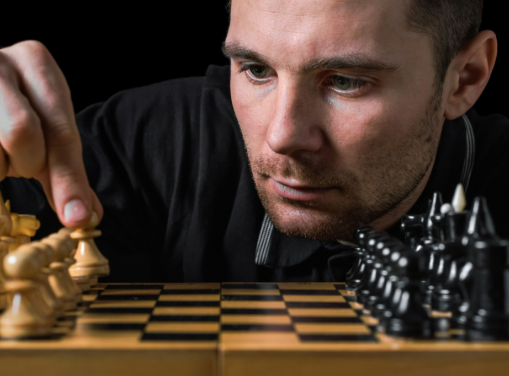
Chess, an ancient intellectual game, tests not only a player’s strategic vision but also their meticulous tactical thinking and precise calculation abilities. Each piece on the chess board has a unique role, but their true power often stems from their cooperation. Excellent players can create powerful offensive and defensive systems through precise piece coordination, thereby gaining an advantage in the game. This cooperation extends beyond offensive maneuvers, encompassing defense, positional control, and strategic deployment.
For beginners and intermediate chess players, mastering piece coordination is key to improving their skills. Many players strive to effectively utilize each piece and create synergy to gain an advantageous position in chessboard games. This article details six key methods for enhancing piece coordination on chessboards . These methods will help you employ more efficient strategies in the game, improving your overall game skills and thinking abilities.
I. Understand the unique function and role of each piece on the chess board.
Before we begin explaining piece cooperation, we first need a clear understanding of the basic functions and roles of each piece. Each piece has its own characteristics and movement methods, and mastering these basic elements is a prerequisite for effective cooperation.
1.1 The fundamental role of soldiers
The pawn is the most basic piece in chess. Although its individual movement is limited, its existence is crucial for the chessboard ‘s layout. The pawn’s main role is to protect other pieces, control the center of the chessboard , and create opportunities for subsequent promotions. By advancing together, pawns can create more space for other pieces. While pawns are relatively weak when fighting alone, they can be much more effective when cooperating with other pieces.

1.2 The unique mobility of horses
The knight is the only piece on the chessboard that can jump over other pieces, and its “L”-shaped movement makes it highly mobile in complex positions. Knights are often used to attack, threaten important enemy pieces, or gain advantageous positions in defense. When combined with other pieces, the knight can quickly traverse the chess board and threaten key opponent pieces.
1.3 The depth coordination between the elephant and the chariot
The bishop’s diagonal movement and the rook’s straight movement provide multidimensional control on the chess board . The bishop controls the diagonals, while the rook controls the horizontal and vertical directions. On the chess board , the bishop and rook can work together flexibly to suppress the opponent’s formation and limit the movement of enemy pieces. They usually need to cooperate with other pieces to attack or defend, forming a powerful offensive and defensive system.
Comprehensive advantages after 1.4
The Queen is the strongest piece in chess, combining the movement abilities of the Rook and the Bishop. It can attack both in a straight line and diagonally. The Queen is often used to attack enemy positions, playing a crucial role. In teamwork, the Queen can quickly coordinate the activities of other pieces, helping to organize attacks or provide support.
1.5 The King’s Core Protection
Although the King is the core piece of the game, it can only move one step at a time and doesn’t possess strong offensive capabilities when acting alone. Therefore, the King usually relies on the protection of other pieces. In the later stages of the game, the King needs to avoid enemy attacks and gain safety through “Fortress” or “castling”.
By understanding the basic functions and roles of each piece, players can better comprehend the cooperation between pieces and utilize their characteristics to form an effective offensive and defensive system.

II. Improve cooperation between pieces by advancing the pawn’s “front line”.
Pawns are not just for occupying the chess board ; they play a crucial role in both offense and defense. Through pawn cooperation, a “pawn line” can be formed, providing better space for other pieces. By grouping together and advancing gradually, pawns can create more offensive opportunities for other pieces.
2.1 Combined Attacks by Soldiers
A coordinated attack by pawns can effectively break through enemy lines. When multiple pawns advance along adjacent columns or diagonals, they can support and protect each other. By advancing the pawn lines, players can exploit gaps in other pieces to launch breakthrough attacks.
For example, multiple pawns can support each other in the same row or column, and can quickly cut in to attack if the enemy pieces make a mistake. At the same time, the advance of pawns is not only to occupy the opponent’s territory, but also to create space for other pieces in the back row, especially allowing powerful pieces such as queens and rooks to better coordinate their attacks.
2.2 Defensive Coordination of Soldiers
Pawns also play a crucial role in defense. A well-organized pawn formation can effectively prevent enemy pieces from breaching the defensive line. By constructing a solid pawn wall, players can slow down the opponent’s advance by utilizing the mutual protection between pawns. Furthermore, the retreat and rearrangement of pawns can help reorganize the defensive line, preparing for later attacks.
3. Utilizing the mobility of horses for flexible cooperation
The knight’s unique mobility gives it immense strategic value on the chess board . Able to leap over other pieces and quickly change position, the knight is a key piece for transitions between offense and defense. In chess board cooperation, the knight’s agility effectively compensates for the weaknesses of other pieces, helping to achieve a well-planned overall strategy.
3.1 Using horses for a counterattack
Horses can swiftly traverse chess board, break through enemy lines, and create chess board within enemy territory. A crucial role of horses in teamwork is counter-offensives. When the enemy attacks, horses can quickly penetrate enemy formations, using their leaping ability to attack weak points and disrupt their strategy. A horse’s attack is often sudden, creating significant psychological pressure on the enemy.
3.2 Coordinate with other pieces to launch attacks
When attacking, the knight often needs to cooperate with other pieces. Cooperation between the knight and the rook, queen, or other pieces can create a stronger attack. For example, the knight can jump to attack the opponent’s defensive position, leaving an opening in the opponent’s back row, which the queen or rook can then quickly exploit to launch an attack. The cooperation between the knight and other pieces can produce unexpected effects, greatly enhancing the overall offensive.

IV. Combined Application of Chariot and Elephant: Creating a Multi-Dimensional Defense and Attack System
The rook and bishop control the straight and diagonal lines respectively, making them crucial pieces on the chess board . In the mid-to-late game , the rook and bishop can form a powerful offensive and defensive system through good coordination. They can support each other, creating a multi-dimensional threat to the opponent.
4.1 Vehicle lateral and longitudinal control
The rook is one of the most threatening pieces on the chess board , controlling space along both the straight and vertical lines. Its movement makes it extremely aggressive. When combined with other pieces, the rook can quickly change positions, launching multi-pronged attacks on the opponent. The rook’s power lies not only in its offensive capabilities but also in its ability to suppress the movement of opponent’s pieces, making it difficult for the opponent to mount an effective counterattack.
4.2 The oblique restraint of the elephant
Elephants’ diagonal attacks are often used for flank assaults. Their relatively long range on the chest board allows them to effectively control the diagonal. When cooperating with a rook, the elephant can utilize its long attack range to complement the rook’s attack, achieving a “pincer” effect. The cooperation between the elephant and the rook is often key to creating a powerful offensive.
4.3 Multiple coordinations in defensive counter-attacks
The combination of rook and bishop is not only used for offense; they also play a crucial role in defense. The rook and bishop can work together to block the opponent’s attack routes and limit the movement space of their pieces. Furthermore, through skillful coordination, they can form a mutually protective defensive line, preventing the opponent from breaking through.
V. The Queen’s Coordinated Operations with the King: The Final Line of Defense and Counterattack Power
The Queen is the strongest piece on the chess board , while the king, though unable to attack proactively, is crucial for the game’s security as the core piece. On the chess board , the synergy between the Queen and the King often becomes the decisive factor in the battle.
Comprehensive control after 5.1
The Queen combines the functions of the Rook and the Bishop, enabling it to launch effective attacks from all directions. The Queen often acts as the vanguard of attacks, forming a combined offensive and defensive force with other pieces. Its role in this collaboration extends beyond attack; it can also protect the King by controlling its area of effect, preventing enemy pieces from directly threatening him.
5.2 The King’s Security
chess board positions through fortification or castling .
VI. Practical Application: Practicing piece cooperation in a chessboard
Theoretical learning is for better application in actual games. In actual chess board games, training and practice in piece cooperation helps players transform these methods into practical tactical thinking. During training, players need to experience the essence of piece cooperation through continuous practice, gradually improving their overall layout and thinking abilities.