
5 highly effective coordination training sets for chess board : making piece placement smoother and more powerful.
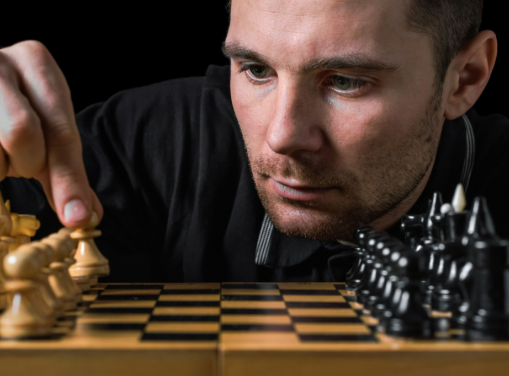
In learning chess, many beginners focus on opening formulas, tactical skills, or endgame patterns, neglecting a deeper and more crucial ability: coordination. Coordination here doesn’t refer to mere movement skills, but rather the overall flow, cooperation, spatial relationships, and layout efficiency of the pieces on the chess board . When you move pieces on the chess board , are the rhythms of the different pieces consistent? Can you get all your pieces into optimal positions within a limited number of moves? Will they block each other? Can your opening remain flexible under pressure? These questions ultimately determine the quality of the first twenty moves, which in turn directly influence the course of the entire game.
Many chess players feel their moves are “stuck” not because of tactical errors, but because of poor coordination, leading to wasted chess board space, piece congestion, and inconsistent offensive and defensive rhythms. To transform your playing style from rigid to fluid, from passive to proactive, and from monotonous to domineering, you need not only to master tactics but also to make your pieces work together like a well-trained team. To this end, we have designed five highly efficient coordination training systems from a chess board perspective. Their core objective is singular: to make your pieces move more smoothly on the chess board , ensuring your opening is powerful and domineering from the very first move.
Visual flow training: Making every square on the chess board “meaningful”.
The first step in improving coordination is enhancing awareness, which means training your visual perception. When facing a chess board , if your attention is fixed on a single piece or target, lacking a global perspective, your opening will inevitably have weaknesses. The core of visual flow training is to train the rhythm of your eye movement across the chess board , making you aware of which squares are empty, which are dangerous, which have potential space, and which are key nodes. The chess board is not static; once you learn to move your gaze, you’ll find many previously unnoticed routes, overlapping attacks, and potential constraints will automatically surface in your mind.
The method for visual flow training is simple yet crucial. You need to spend time each day staring at an empty chess board , without placing any pieces. Instead, treat the chess board as a spatial field with “energy grids,” imagining how the pieces flow after entering the board from their starting positions . You can even close your eyes and mentally simulate the knight’s movement, the bishop’s diagonal penetration, and the rook’s dominance on open lines. In this training, the chess board is no longer just a flat surface, but a flowing spatial field. When you can do this, you’ll be able to more easily identify logical routes, uncongested paths, and optimal positions for your pieces to resonate during a game.

Multi-child synchronous start training: perfectly unifying the rhythm of the first ten moves.
A major problem for many chess players lies in their asynchronous rhythm during the opening phase. For example, they might rush to attack one side while neglecting control of the center; or allow a few pieces to charge forward too early, making their formation easily broken by the opponent. Synchronized start training is designed to solve this problem. To get the five different pieces into their fighting positions correctly in the early game, you must train them to move them as a whole, rather than operating them individually.
The training method involves selecting an opening and then repeatedly executing moves one through ten without any opponent interference. The focus isn’t on memorizing the opening, but rather on whether each move improves the overall formation. For example, you need to determine if your knight is blocking the bishop’s path, if your bishop and rook have formed a potential open line cooperation, or if your queen has entered the battlefield prematurely, causing unnecessary tempo shifts. You must ensure that each move serves the overall strategy, not just a single, isolated plan.
When you achieve this, you’ll clearly feel a speed increase in your opening moves, and your pieces will move in unison. This rhythmic consistency makes your playing style more stable, faster, and more aggressive. The ultimate goal of synchronous training is not mechanical repetition, but to build intuition through repetition, enabling you to naturally identify what constitutes “overall optimization” and what constitutes “local waste” in actual games.
Area-Dominated Training: Create a control network where your pieces respond to each other.
Once you’ve mastered coordinating the opening rhythm, it’s time to expand your control. The chess board has limited space, and the difference between a strong and weak player often lies not in the number of pieces, but in the number of control lines. The core goal of area dominance training is to allow your pieces to collectively establish dominance over a specific area of the chess board without interfering with each other , rather than fighting individually.
Training can begin with dividing the chess board . For example, you can divide the chess board into four quadrants and then practice opening moves in one of them. You need to ask yourself: Does your rook provide penetrating support for your bishop? Is your knight positioned on a key square that can provide a second attack? Does your pawn provide a stable base for other pieces? Area-dominant training emphasizes not attack, but “boundaries”—establishing sufficiently solid area boundaries that prevent the opponent from easily invading and allow you to efficiently maneuver your pieces within those areas.
The key to this training is that you must create a network of mutual support between your pieces, rather than having them act in isolation. For example, the bishop controls the diagonal, the knight controls the jump points, and the rook controls the straight lines, and these three lines of control must overlap and support each other. You can train this feeling by constantly placing and adjusting your pieces. With long-term practice, you will naturally develop a keen sense of territorial control, and you will no longer need to launch powerful attacks to psychologically suppress your opponent’s space.

Complex Center Coordination Training: Overcoming Dilemmas and Maintaining Layout Flexibility
The center of the board is the most complex and crucial area in chess, where almost all complex positions unfold. To improve piece coordination, one must master the complex patterns of movement in the center. Many players experience congestion in the center, causing their pieces to stagnate or even be pinned down by their opponent. The purpose of complex center coordination training is to enable you to maintain optimal piece fluidity even in chaotic situations and to find the most rational breakthrough point amidst the chaos.
The training method involves deliberately creating overlapping control and attacking situations in the center of the chess board . This includes placing multiple pawns, having the bishop and knight mutually restrain each other, and creating a potential adversarial structure between the rook and queen. You then repeatedly practice how to prevent your pieces from being congested while maintaining attacking opportunities. This training will make you realize that the center is not simply a contested area, but a complex information field where you need to find routes for coordinated movement of your pieces.
Once you’re familiar with this complex coordination training, you’ll be able to easily handle situations with multiple attack lines simultaneously during a game, and more quickly determine which squares must be contested and which can be abandoned. Your pieces will no longer panic under pressure from your opponent, but will instead maintain the flexibility and dynamism of their formation amidst chaos.
Endgame Coordination Extension Training: Make Every Piece a Source of Victory
Although this is the final part of coordination training, its importance is no less than that of the opening. Many players have poor endgame quality not because they don’t understand the endgame, but because their pieces lose their rhythm in the endgame. In the endgame, the value of each piece is amplified, and any uncoordinated move can cause the situation to deteriorate instantly.
Endgame coordination training focuses on perfecting the cooperation between a few pieces. For example, the cooperation between the king and rook, king and bishop, king and knight; how two pawns support each other to create pathways; or how your king can simultaneously perform offensive and defensive tasks. Coordination in the endgame is not a matter of quantity, but of quality and direction. You need to train yourself to ensure that every piece movement advances the game, rather than wasting time.
You can practice this training repeatedly by setting up typical endgame structures, such as the rook and pawn endgame or the king and bishop endgame. Your goal is to keep all your pieces moving in the same strategic direction, rather than scattering your forces. The longer you train, the more naturally you will master the coordination rhythm in the endgame and maintain clear judgment under pressure.

Conclusion
Many chess players understand chess as memorizing formulas, calculating offense and defense, and tactical maneuvering, but what truly allows for sustained improvement is the coordination of pieces. The chess board is a spatial structure, and each piece is a unit of power within that space; coordination is the key to unifying these forces into a cohesive whole. This article presents five training systems, from vision, rhythm, zones, complex centers to the endgame, each interconnected. Once you truly master the skills of piece coordination, you’ll find your openings suddenly become fluid, your attacks more powerful, your defenses more solid, and even your opponent will sense your increased control over the chess board .
Coordination training isn’t something that can be rushed; it’s a long-term cultivation of a mindset. Once established, it becomes the most powerful hidden strength in your playing style. The chess board isn’t static; it flows with your thoughts, and coordination is the key to making that flow smoother, faster, and more aggressive. You’ll not only see more options in each move, but each move will also be of higher quality and more aggressive. With consistent practice, your chess skills will undoubtedly experience a breakthrough improvement in a short period.