
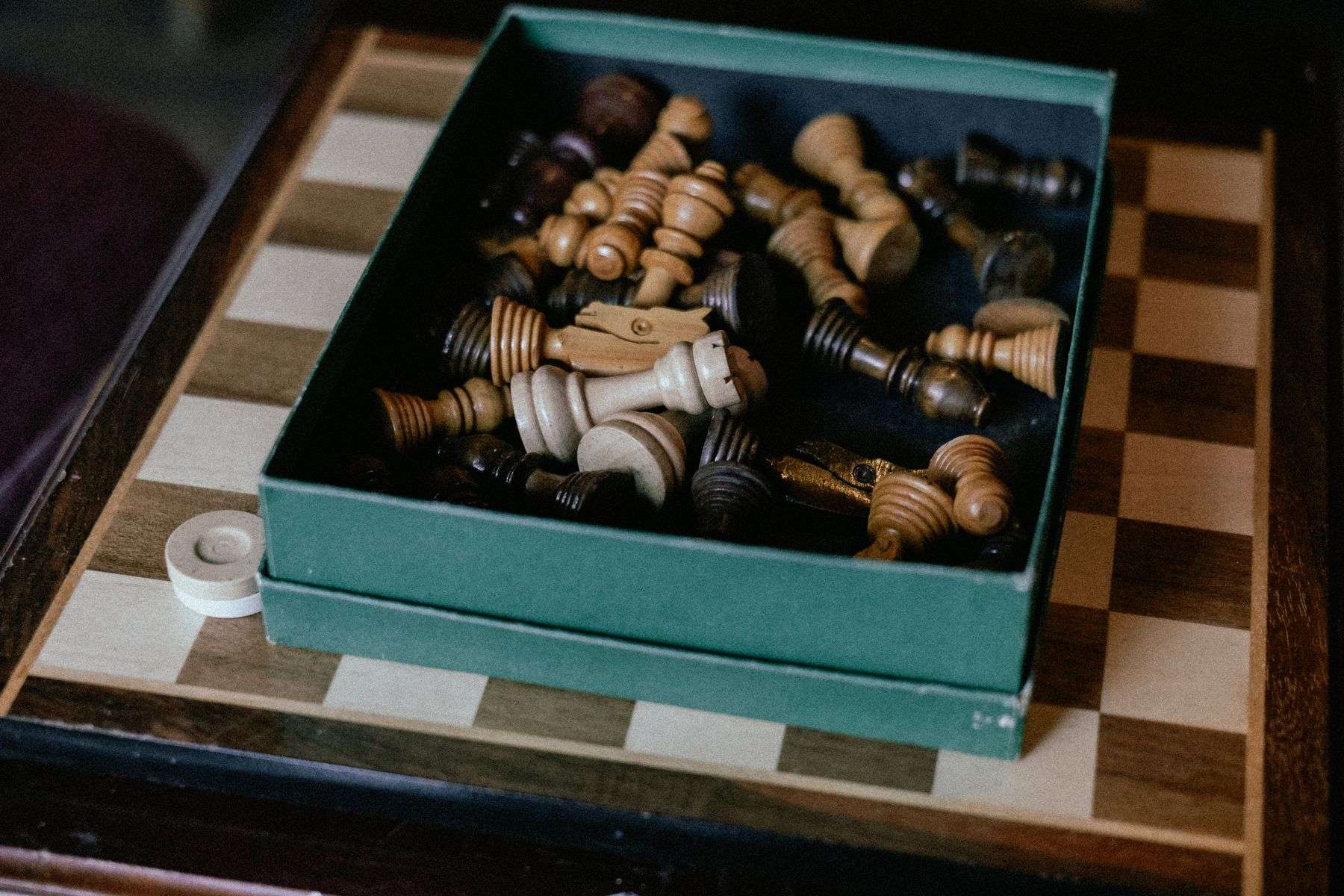
Chess Boards With Storage: Drawers, Folding Interiors & Real Footprint
A chess board with storage adds furniture mechanics to a playing surface. Drawer clearance, humidity, piece orientation and the position of extra queens all matter before the storage feature becomes genuinely useful.
Open, play, close and reopen before calling the design convenient
Chess board with storage, wooden chess board with storage and folding chess board with storage combine the playing surface with an organization system. That creates a sequence rather than a single feature: the board must lie flat, storage must be reachable without disturbing play, pieces must have enough clearance, and the case or drawer must close without forcing delicate parts. The best storage disappears during the game and becomes obvious afterward.
A drawer adds outer width and sometimes clearance requirements. A folding case adds closed thickness. Both can turn a familiar board-size label into a misleading footprint if the listing does not separate playing field from total product dimensions. Storage should therefore be measured as part of the object, not as a hidden bonus.
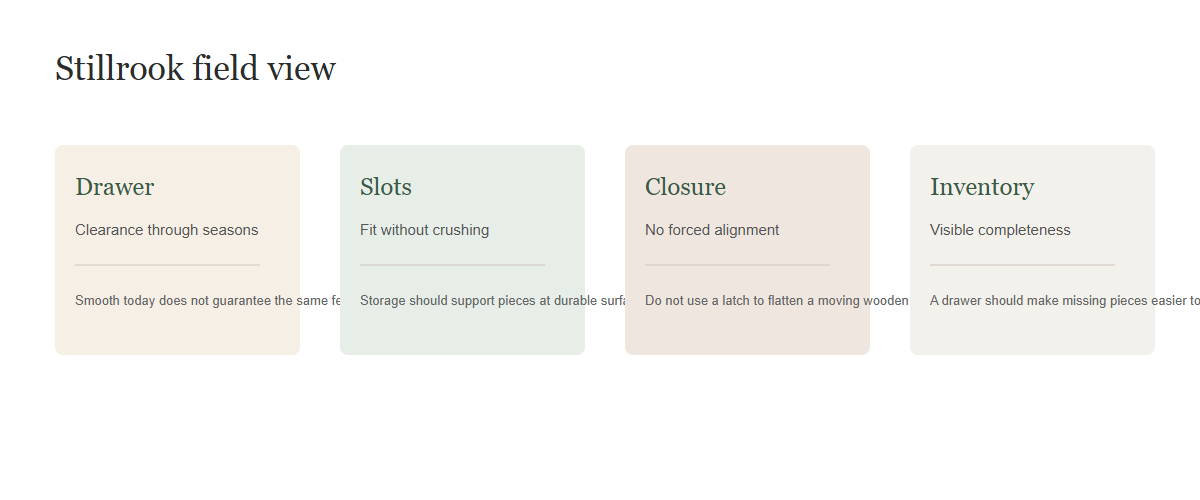
Test storage with the pieces inside
An empty drawer can feel smooth and an empty folding case can close perfectly. Convenience only exists when the full set is loaded, carried, reopened and played.
Side drawers
Measure the clearance needed to open them at the table and test whether they remain closed when the board is moved.
Under-board trays
Check access from both seats and whether the added height makes the board less comfortable to reach across.
Folding interiors
Count the packed thickness and ensure each piece is retained without pressure on felt or carved details.
04Separate box instead
A separate case can keep the playing board thinner and easier to move when integrated storage adds too much bulk.
Five things built-in storage changes
Storage adds more than capacity. It changes board height, footprint, weight, moving parts and how the wood assembly reacts to the room.
Usable table width
A drawer needs opening clearance. Measure the board with the drawer extended if it will be accessed during play.
Loaded mechanism
Fill every slot, then open and close the storage repeatedly. Weight distribution can change how a drawer or folding half behaves.
Piece pressure
A storage slot should restrain a piece without crushing felt, forcing the king crown against the lid or rubbing a knight nose.
Closed dimensions
For folding storage boards, record length, width and thickness while closed. Thickness often determines bag fit.
Wood movement
Drawers and paired board halves can become tighter or looser as moisture changes. A mechanism that needs force is a warning, not an invitation to pry harder.
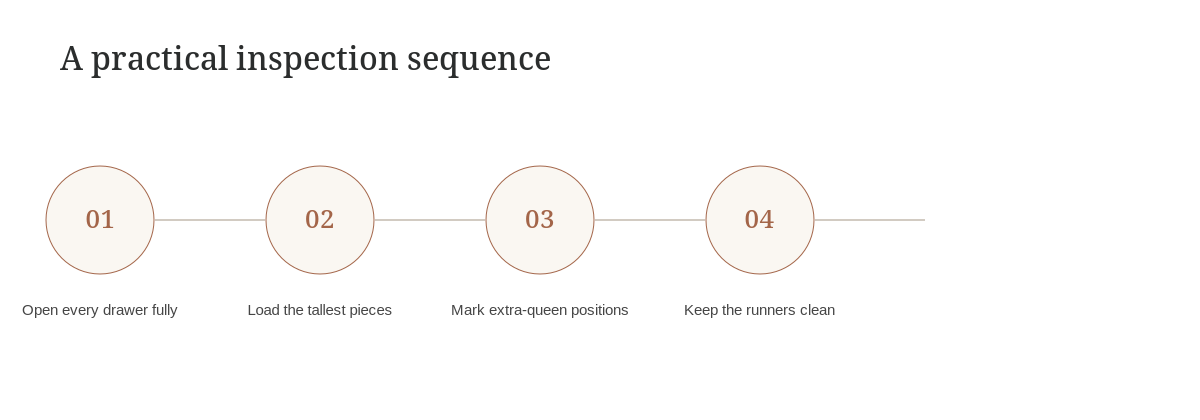
Open every compartment with the set loaded
Integrated storage changes the board from a flat object into a small piece of furniture. Load every compartment, operate the drawer or lid on the table you intend to use, and verify both playing stability and the extra clearance needed to reach the pieces.
Do it with the board placed where it will normally be used.
Check crown and king clearance before closing.
Avoid loose pieces hidden behind the main inventory.
Debris can mimic swelling or structural misalignment.
Built-in storage has its own wear cycle
After regular use, check whether drawers still move freely, compartment linings stay attached, hinges remain aligned and pieces return without pressure on crowns or knight noses. Those changes affect the storage function even when the playing surface still looks new.
| Open | Check total board footprint and access to drawers or compartments. |
|---|---|
| Play | Storage should not reduce hand room or make the playing field uneven. |
| Close | Pieces need clearance from pressure points and a clear home for extras. |
| Reopen | The next game should start with a complete, undamaged inventory rather than a search. |
Integrated storage changes the board in three dimensions
A board with drawers or a folding interior cannot be judged by the top surface alone. Storage adds thickness, moving clearances and internal pressure points that can change where the product fits and how it ages.
| Storage design | What it saves | What it adds |
|---|---|---|
| Side drawers | No separate chess box and fast access from the table | Side clearance, drawer hardware, stops and moving wood tolerances |
| Under-board tray | Keeps the top visually clean and pieces close to the board | Overall thickness and the need to lift or open the board to reach pieces |
| Folding interior | Board becomes its own carrying case | Center seam, closure force, piece cavities and pressure against carved details |
| Separate case | Lets the board remain mechanically simple | Second object to store and carry |
Measure the footprint again with every compartment open
A drawer that fits inside the product when closed can need several more inches of free space during setup. On a narrow desk, the drawer may collide with a wall, a clock or the player’s lap even though the board itself fits perfectly.
Load test
Fill every intended slot, including spare queens, then open and close the storage normally. Pieces should not become the drawer stop, and the lid should not press directly on crowns or knight noses.
Pressure-point test
Look for foam marks, compressed felt and polished spots where one piece repeatedly touches the interior. “Nothing moves” can be achieved by secure support or by excessive compression; those are not the same.
Room-clearance test
Mark the fully open drawer or case footprint on the intended table. Include the player’s chair and forearm because a side drawer often opens into the same space a hand uses during play.
Seasonal-fit test
If the storage is wood-based, notice whether the movement changes with the room. Wood exchanges moisture with surrounding air, so a drawer that becomes temporarily tighter should not automatically be forced.
The drawer tightened on a humid afternoon
A Stillrook note records a wooden chess-board drawer that normally moved smoothly and then became tight after several humid days. Rather than forcing the front, Jose moved the board to a more stable indoor environment and let the fit settle.
The point is not that every tight drawer is caused by humidity. It is that integrated storage adds moving wooden parts and clearances to a product that already has to stay flat. If a drawer is forced, a temporary fit change can become edge damage, loosened joints or a cracked pull area.
Drawers, slots and folding-storage questions
Built-in storage changes the board’s footprint, weight and wear cycle. A drawer or folding interior should be evaluated with the full piece set inside and with the board in the room where it will live.
Wood movement reference for integrated storage
Why can a wooden storage drawer become tight or loose?
When an integrated wooden drawer begins to bind, unload it and test the empty mechanism first. A shifted piece, debris, lining material or indoor moisture change can all alter the feel, so forcing the handle or sanding the runner before diagnosis is an unnecessary risk.
Where should extra queens be stored?
Integrated storage works best when spare queens have visibly separate positions from the starting armies. That way an open drawer functions as a quick inventory map instead of presenting thirty-four similar cavities that must be counted every time.
Can tight foam storage damage chess pieces?
With built-in compartments, foam should locate a piece by a strong area such as the base rather than using the closed drawer to press on a king crown, knight nose or narrow neck. Close the loaded storage slowly once and reopen it; visible compression marks or a piece that springs upward indicate that the cavity is doing more than simply preventing movement.
Which measurements matter when a folding set is carried in a bag?
For a board with built-in storage, measure the normal footprint and the operating footprint. A side drawer can require extra width while an opening lid needs vertical room; neither requirement is captured by the playing-surface dimension alone.
Can the two halves of a folding board move differently with humidity?
Yes. If materials, grain orientation or moisture response differ between halves, alignment and the center seam can change. Avoid forcing the closure while the board is adjusting to a new environment.
Load the drawer before judging the mechanism
An empty drawer can slide perfectly while a fully loaded drawer catches on tall kings, loose pouches or foam that rises above its intended line. The real test includes the exact piece orientation used during ownership.
Humidity is part of drawer tolerance
Wood can change dimension as moisture changes. A seasonal tight spot is a reason to stabilize and inspect before forcing the drawer. A design that leaves no tolerance can turn normal movement into a service problem.
Storage increases the product footprint in use
A drawer that must extend fully may require several extra inches of clear table space on one side. The “board size” therefore has a use-state dimension that the closed outline does not reveal.