
Chess board How a single angle difference can fatally affect visual judgment: A truth revealed
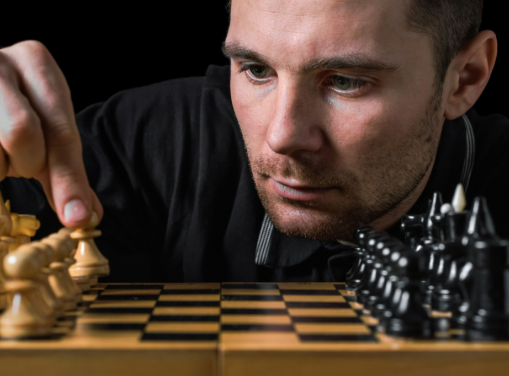
You think you’re “seeing clearly,” but actually you’re just “getting used to it.”
In the world of chess, many firmly believe it’s a completely rational game. The chess board is standard, the pieces are fixed, and the rules are absolutely clear. It seems that as long as the mind is calm enough and the calculations are precise enough, victory or defeat depends solely on the depth of thought.
But those who truly play chess for a long time will eventually discover a disturbing fact: even though the chessboard hasn’t changed, the rules haven’t changed, and the opponent hasn’t used any tricks, you still “misread” it. Not miscalculated, but misjudged.
This kind of “misreading” often does not stem from a lack of skill, but from a factor that is overlooked by most people – the angle of the chess board.
A tiny difference in the angle of the chess board relative to the line of sight can be enough to distort spatial judgment, weaken threat perception, and even lead to fatal mistakes at crucial moments.
This is not some mystical phenomenon, but an inevitable result of the interplay between visual psychology, spatial cognition, and competitive decision-making. This article will systematically analyze, from multiple perspectives, how differences in the angle of the chess board truly and profoundly affect human visual judgment and ultimately change the course of the game.
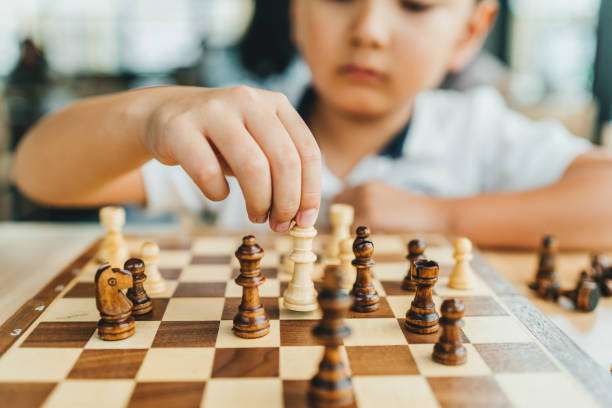
The chess board is not a two-dimensional plane, but a space “reconstructed” by the brain.
From a physical perspective, the chessboard is a standard two-dimensional square grid. But from a cognitive perspective, it is never two-dimensional.
When each player observes the board, their brain automatically reconstructs the space, transforming it into a cognitive model with depth, directional weights, and visual priorities.
This model is not entirely rational; it is heavily influenced by the angle of observation.
The brain most easily establishes a stable spatial mapping when the chessboard is directly in front of the line of sight and the four edges are roughly parallel to the boundaries of the field of vision. However, even a slight rotation of the chess board, even by only a few degrees, will cause the spatial reconstruction to shift.
This shift doesn’t manifest as “I can’t see clearly,” but rather infiltrates judgment in a more subtle and dangerous way.
The relative distance between pieces can be incorrectly compressed or stretched, the sense of extension along the diagonal lines can change, and attacks in certain directions can psychologically appear “farther” or “less urgent.”
Players often fail to recognize these changes because they remain clearly visible, and the positions of the pieces are perfectly accurate. The problem is not a lack of information, but rather that information is being misweighted.
How changes in perspective alter the ranking of the intensity of a sense of threat
In actual play, players don’t scan the chess board square by square ; instead, they rely on a rapid threat perception mechanism.
The brain completes an initial screening in a very short time, identifying which areas are dangerous, which are safe, and which lines need priority defense.
The chess board plays an extremely crucial role in this process.
When the long side of the chess board forms a certain angle with the line of sight, the human visual system’s sensitivity to “far” areas decreases significantly.
Pieces located further away from the line of sight are naturally perceived as less threatening, even if they objectively pose a strong attack. Conversely, pieces closer to the line of sight, even if their attack power is limited, are more likely to be overestimated.
This means that in the same game, a player’s intuitive judgment of the situation can be biased depending on the board position. This bias can be especially pronounced in complex middlegames or time-pressured endgames, where it can directly affect the order of decision-making.
Even more fatal is that the perception of threat is often not unidirectional. Some diagonal attacks may appear exceptionally obvious from one angle, while being almost “invisible” from another. This is precisely the breeding ground for many classic miscalculations.
Diagonal: The killing path most easily deceived by angles
If we were to say which type of chest board is most susceptible to the effects of angle, it would definitely be the diagonal.
The diagonal is one of the most unstable directions in the human visual system. Compared to horizontal and vertical directions, diagonal structures rely more on spatial integration than on simple linear scanning.
When the chest board rotates, the perceived length of the diagonal changes significantly.
Many chess players have had similar experiences: they clearly saw the bishop line and confirmed it was “out of reach,” but the next move the opponent’s bishop captured the crucial piece.
Only during review did they realize that the diagonal line had been incorrectly shortened in their minds.
This error doesn’t stem entirely from miscalculation, but rather from visual compression.
The angle of the chess board makes the diagonal appear as a flatter projection in the field of vision, and the brain automatically lowers its assessment of its extended potential.
In high-level matches, many ingenious tactics are built upon the illusion of diagonal lines. It’s not that the opponent has calculated things in great depth, but rather that they know from which angle you are more likely to overlook that line.
The destructive power of time pressure amplifying angular errors
Given ample time, players can offset visual biases through repeated checks and logical verification. However, once they enter rapid or blitz games, or the time-pressured phase of long games, the impact of these angle differences is amplified exponentially.
The reason is that the brain relies more on intuitive judgment under stress, and intuition is the system most easily manipulated by visual input.
When the chest board angle is not ideal, intuition will prioritize those routes that “seem reasonable” and ignore those threats that are not visually prominent.
This explains why many players repeatedly make the same types of mistakes in rapid chess, but rarely in slow chess.
It’s not that their skill level has suddenly dropped, but rather that the error between their vision and cognition has lost its corrective mechanism under time pressure.
Implicit angle changes caused by different sitting posture heights
Many people believe that the angle of a chess board is only related to its orientation, but they overlook the crucial variable of sitting height.
When a player sits too high or too low, the angle between their line of sight and the plane of the chessboard changes, and the proportion of the chess board’s projection on the retina also changes.
This change is enough to affect the relative salience between pieces.
Sitting too high, closer to a bird’s-eye view, compresses the sense of depth, making distant pieces easily underestimated.
Sitting too low, the depth is stretched, making nearby pieces stand out more, which can easily lead to over-defense.
Professional chess players are often extremely sensitive to chair height during matches. This isn’t a comfort issue, but rather a matter of visual stability. They need to ensure that their line of sight is as consistent as possible in every game to avoid unconscious misjudgments.
From Training to Competition: Why Angle Issues Have Been Long Overlooked
The chess board angle is so profound, yet it has long been overlooked because it doesn’t align with people’s intuitive understanding of “technical issues.”
We are more likely to accept calculation errors or poor opening choices, but unwilling to admit that we were “tricked” by a rotation of a few degrees.
Furthermore, in most training environments, the chess board is set up randomly, and few people deliberately maintain a consistent angle.
Over time, the player’s brain adapts to a certain personal habitual angle, making them prone to judgment errors when the game environment changes.
This explains why some players perform more consistently at home or in familiar environments, while making frequent mistakes in unfamiliar places. The problem isn’t entirely psychological, but rather stems from changes in visual input conditions.
How to proactively reduce the judgment risk caused by angle differences
Understanding the problem is only the first step; the more important thing is how to deal with it.
- A stable chess board placement angle is fundamental to reducing risk. Whether in training or competition, try to keep the chess board directly in line of sight to minimize unnecessary spin.
- Develop the habit of regularly scanning the entire chess board, especially before making crucial decisions, and deliberately check those visually “inconspicuous” lines.
- When time permits, occasionally re-observing the chest board from the opponent’s perspective can effectively break the illusion created by fixed angles. This not only helps in discovering hidden threats but also improves overall spatial understanding.
In conclusion: True masters don’t just calculate moves, they fight against cognitive biases.
Chess is never just a game between pieces; it’s a game between a person and their own cognitive system.
Subtle differences in the angle of the chess board, seemingly insignificant, can determine victory or defeat at crucial moments.
The next time you hesitate, or find yourself making a “how could this be?” mistake during a review, ask yourself: Did I really miscalculate, or was I deceived by my own perception?
Understanding and respecting this visual truth may be closer to real progress than memorizing ten more sets of openings.
FAQ
Question 1: Does the angle of the chess board affect beginners and advanced players differently?
Angles affect players of all levels, but the manifestation differs. Beginners are more likely to overlook obvious threats, while advanced players may underestimate a key line in complex positions, leading to subtle but fatal misjudgments.
Question 2: Can online gaming completely avoid the problems caused by angles?
Online gaming reduces the difference in physical angles, but screen perspective, scaling ratio, and display size will still introduce new visual biases. It is not completely immune; it’s just a different format.
Question 3: Are there specific methods for training visual stability in chess?
Some high-level training deliberately changes the board orientation or perspective to enhance a player’s spatial adaptability. This type of training is not common, but it is very effective in improving overall judgment stability.